 NGL Biathlon
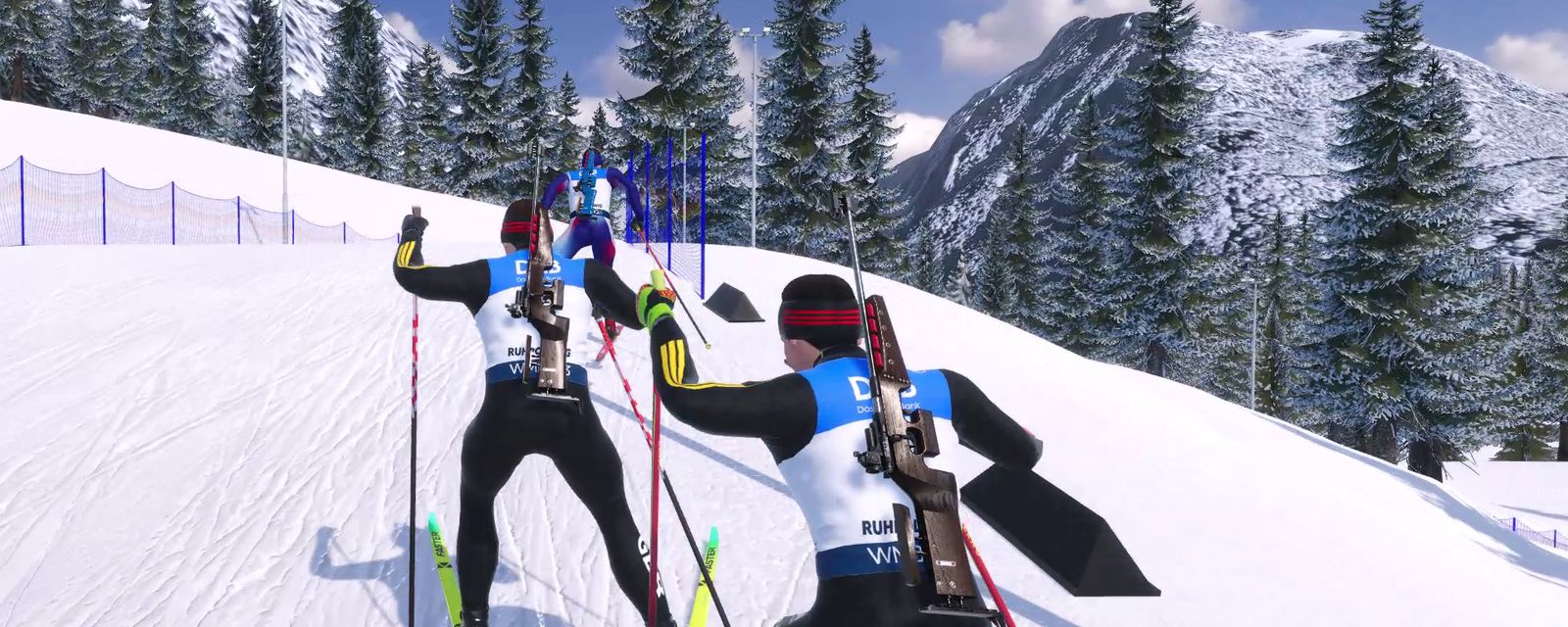
After the range, most questions players send us are about the track: what Strength and Speed-strength do, why an athlete has four kinds of endurance, and when to fire the superboost. Here is how skiing works in NGL Biathlon 2027, following the rules the game itself uses
Eight skiing stats
The athlete card sorts the skiing stats into three groups: Speed, Endurance and Boost. The Speed group sets how fast the athlete can go
- Strength is how hard the athlete pushes off. It is the main source of speed at every moment of the race
- Speed-strength decides how much of that push is left as the athlete gets faster. Every skier pushes less effectively at high speed, and with more Speed-strength the push fades later
- Max speed adds power while you boost and makes the superboost push harder. At 85 and above it also opens the Finisher skill
The Endurance group decides how long the athlete keeps that speed
- General Endurance sets how much stamina the normal stride costs, and it counts toward the cost of boosting too. At 85 and above it opens the Second breath skill
- Speed Endurance sets the extra stamina cost of boosting and the size of your superboost reserve
- Strength Endurance and Speed-Strength Endurance decide how well Strength and Speed-strength hold up while the stamina runs down. With low values the push sags early, with high values it holds until the stamina is nearly gone
The Boost group has one stat, Boost Reserve. It sets the length of the boost bar and how fast the bar refills between bursts
Which stats matter most
Strength and Speed-strength work every second you spend on the track, so in every format they are the strongest stats. Max speed joins in whenever you boost. The endurance stats and Boost Reserve pay off where the reserves run short, which makes them worth more in long races such as the individual and the mass start and for players who boost a lot. In a sprint, where you boost through a large part of a short race, Boost Reserve counts for more than in the long formats
Strong and weak athletes differ less in top speed than you might expect. From the bottom of the scale to 100, the steady speed on the flat grows by about an eighth, while the stamina reserve grows several times over. A weaker athlete is barely slower on the first lap and runs out of stamina much sooner, and in a long race that is where the gaps open
Stamina and fatigue
Stamina does not come back during a race, and only the Second breath skill returns part of it. The normal stride spends it slowly and boosting spends it much faster. As it drops, the push weakens a little, at a pace set by Strength Endurance and Speed-Strength Endurance
Running low costs you most through the boost. The boost bar can only fill up to the share of stamina you have left: with half your stamina, at most half the bar. When the stamina is almost gone there is almost no boost, and on the last climbs you ski on the plain stride while the others still accelerate
Sitting in a rival's slipstream spends no stamina at all and uses a separate reserve instead. The Tutorial has a lesson on it
Boost
Hold the boost key and the athlete goes faster. The thin boost bar drains while you hold the key and refills only after you let go. Hold it to the very end and the boost switches off by itself although the key is still down. Release, and the bar starts filling again
A bar that sits full is refill you never get back. Spend it on the climbs, where the athlete is slowest and the game suggests boosting, and let it fill on the descents. Boosting does nothing in a tuck, because the athlete is not pushing there
Every second of boost costs stamina through both Speed Endurance and General Endurance. It also drives the pulse up to its maximum, which you feel at the range. How that works is covered in Shooting and pulse
Superboost
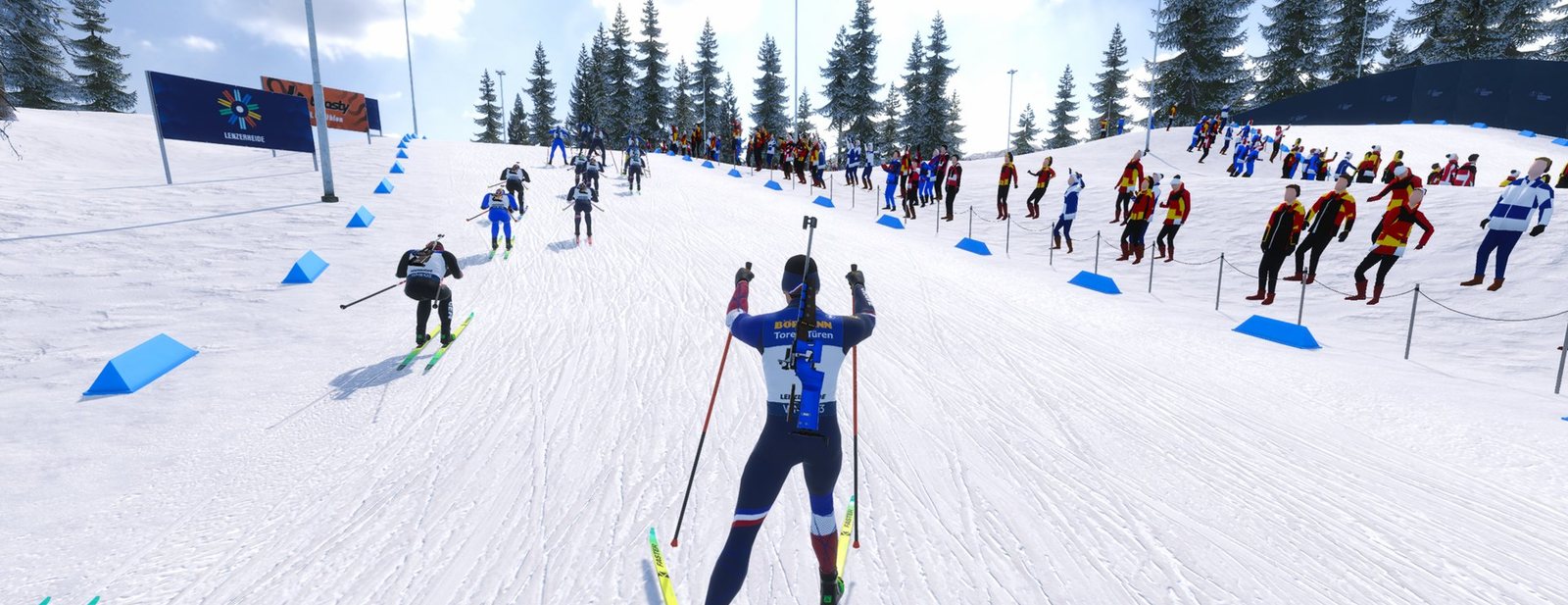
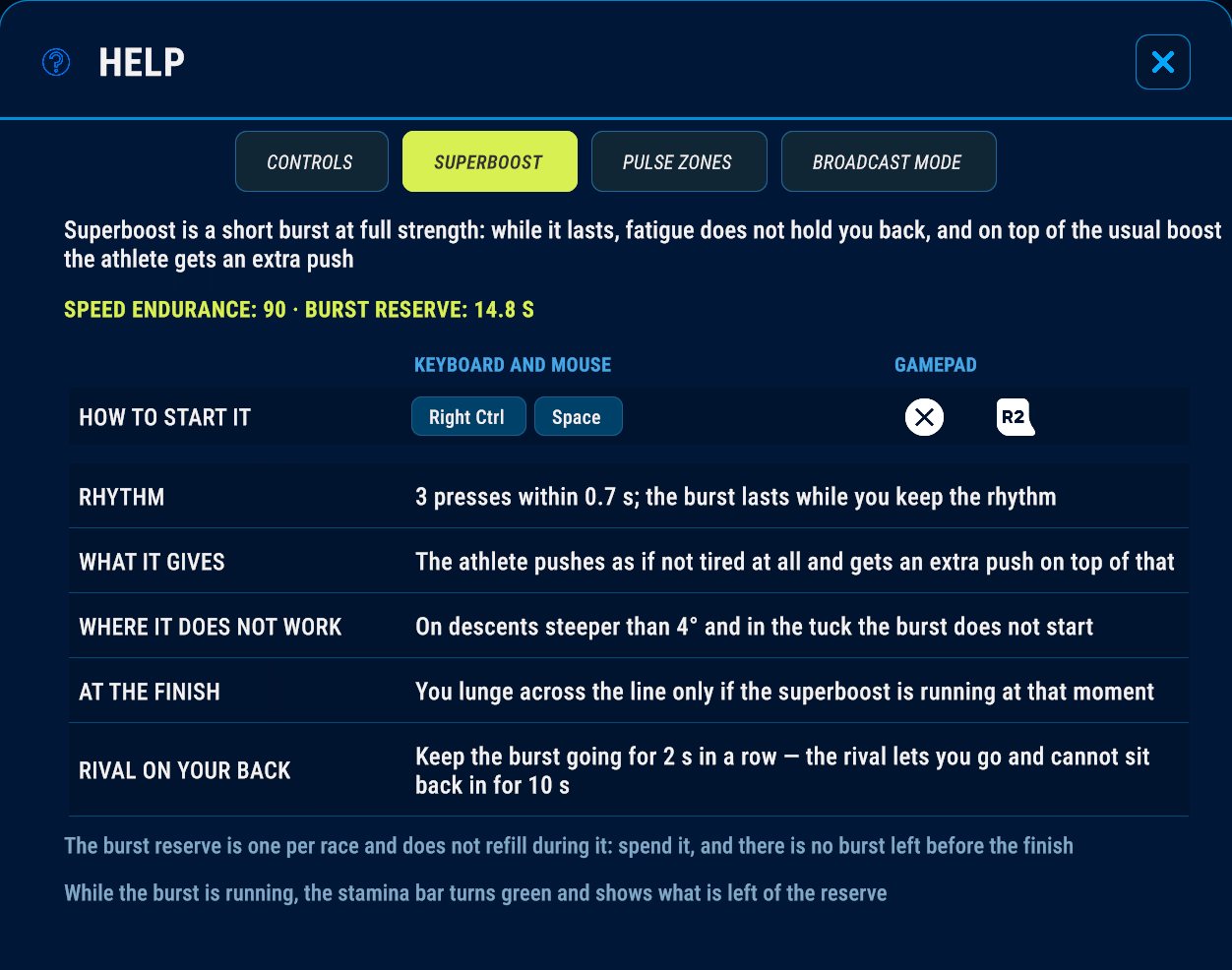
The superboost sits on the same key as the boost: you hold the key to boost and tap it to superboost. Three presses within 0.7 seconds start it, and it runs as long as you keep up the rhythm. While it lasts, fatigue no longer holds the athlete back and an extra push comes on top. The more tired the athlete is, the bigger the difference against the normal stride. The stamina bar turns green and shows what is left of the superboost reserve
The reserve is one per race and never refills. Speed Endurance sets its size, from about four seconds at the bottom of the scale to seventeen at 100, and Max speed sets how hard the burst pushes. Help → Superboost shows the reserve of your own athlete in seconds. Bots never use the superboost. It belongs to the player alone
Players ask most often where to spend it. Four things are worth knowing
- On climbs. The burst does not start on a descent steeper than 4 degrees or in a tuck, and a running one stops at once as soon as the descent gets that steep or the athlete tucks. Firing it just before the drop gains nothing: spend the reserve on climbs
- At the finish. The athlete lunges across the line only if the superboost is running at that moment. The lunge is worth about a tenth of a second, which decides photo finishes, so keep a little of the reserve for the last metres
- With a rival on your back. Hold the burst for a couple of seconds and a rival sitting in your slipstream lets go and cannot sit back in for a while. Help → Superboost gives the exact numbers
- Across the whole race. Burn it all on the first lap and nothing is left for the final climb or the line
Descents
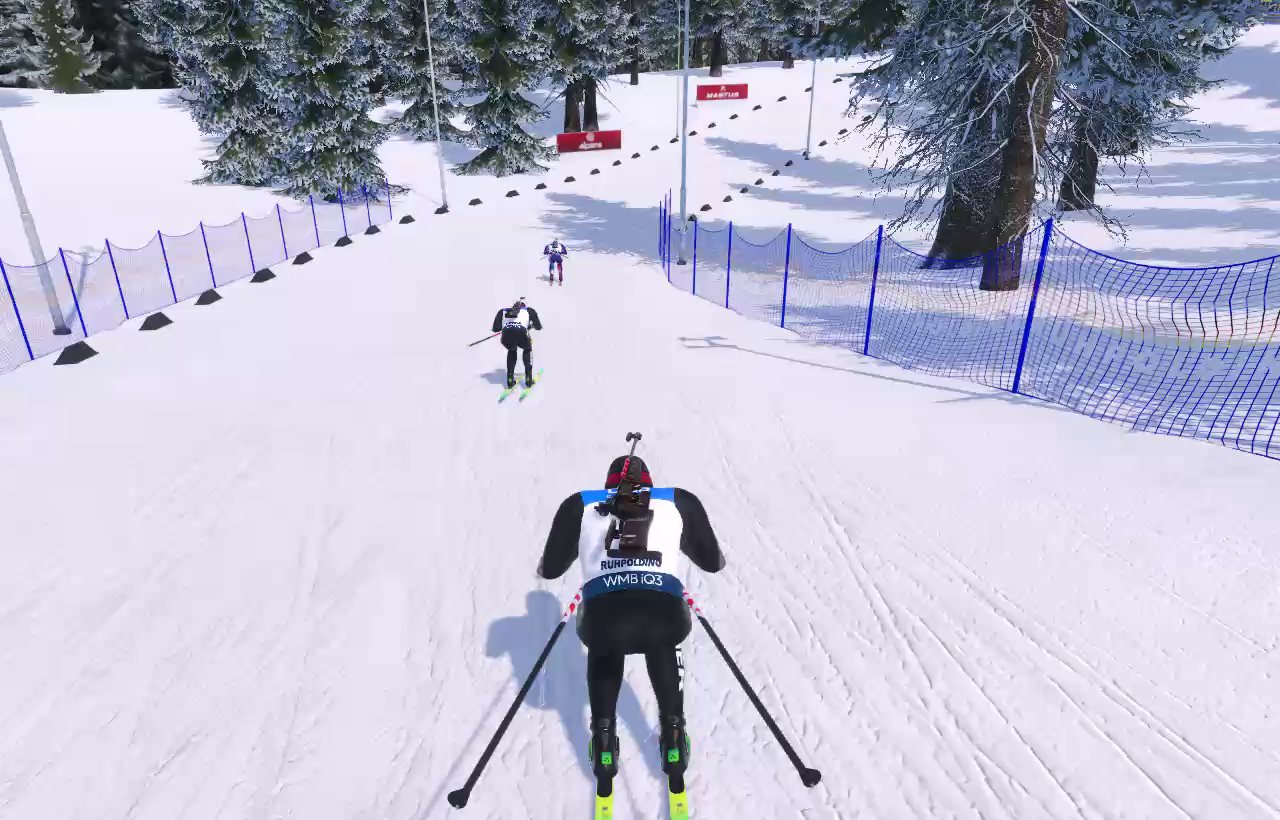
On a descent, hold the back key or pull the stick back and the athlete drops into a tuck. There the athlete does not push, so the stats and the athlete's weight change nothing: everyone goes down the same way, and only the skis make a difference. Stand up when the speed stops building. Too early and you give away speed the slope would still have added, too late and it bleeds away on the flat
Skis and weather
Before each race the Race preparation screen lets you pick a pair of skis. Every pair has its own temperature range, and some are made for new snow or for old snow, so the pair that suits the day glides noticeably better. Auto-pick chooses for you. In 2027 the bots' skis follow the same rule, and a bot on a well chosen pair can be quicker than its stats suggest
You can switch Ski characteristics off in Settings, and then every pair glides the same whatever the weather. In a career they are always on
Two skills for the track
- Finisher (Max speed 85+) gives extra speed over the last 100 metres, and the boost bar stops draining there
- Second breath (General Endurance 85+) gives back a third of the stamina you have spent when the final lap begins
What the difficulty level changes
The level shifts every skiing stat of the bots, so on higher levels they go a little faster and tire later. Hard adds nothing and serves as the starting point, Easy and Medium make the bots weaker, and Insane makes them stronger. In Settings → Difficulty you can switch on Advanced difficulty and set Bot skiing difficulty on its own. Online, the room sets one level for everybody
Practice
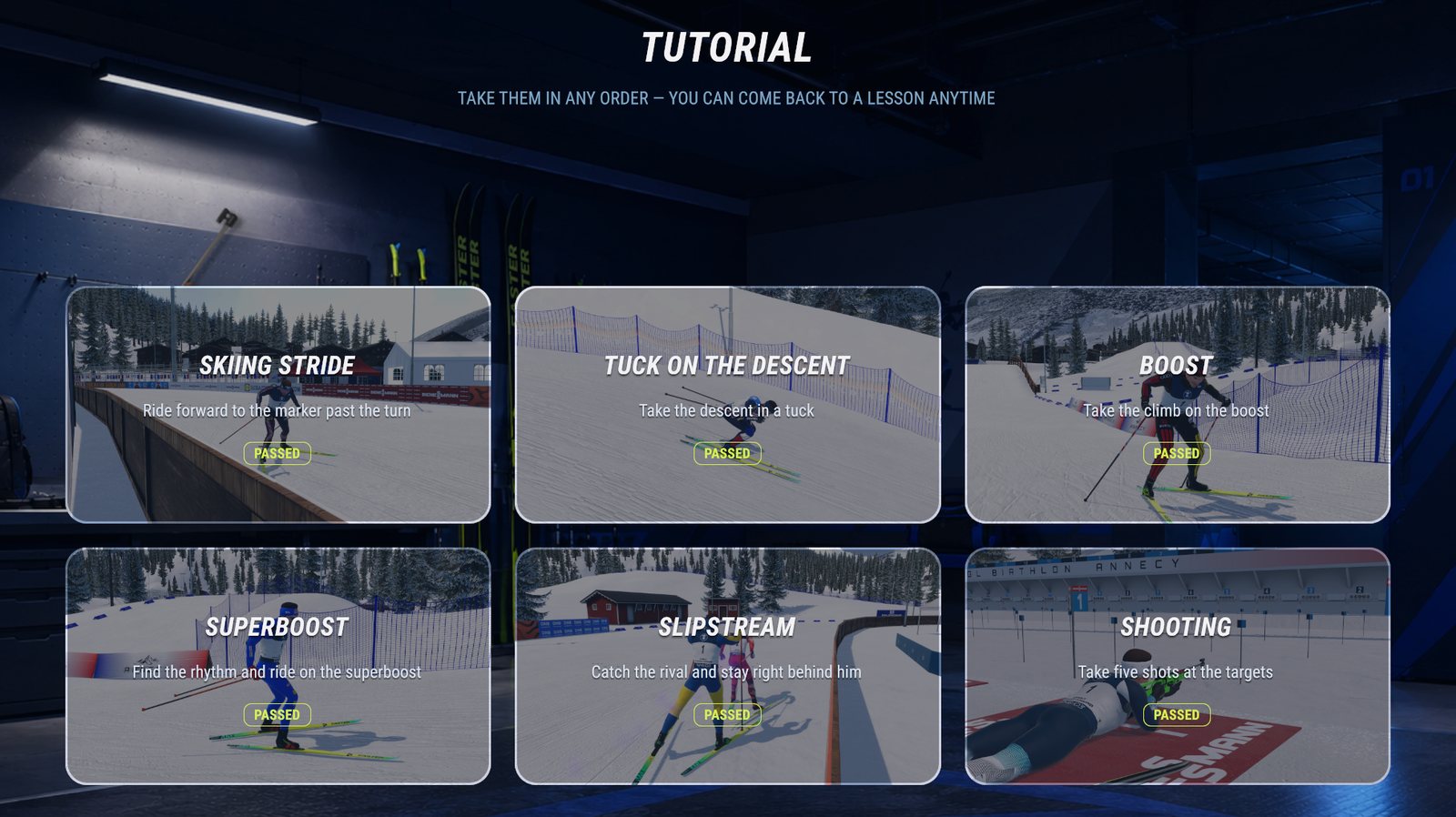
The Tutorial section has short lessons on the skiing stride, the tuck, the boost, the superboost and the slipstream, and in the tuck lesson it tells you how well you timed standing up. Training → Skiing training runs a race in the format you choose with the shooting left out, so you can try a plan for the boost and the superboost on a whole race