 NGL Biathlon
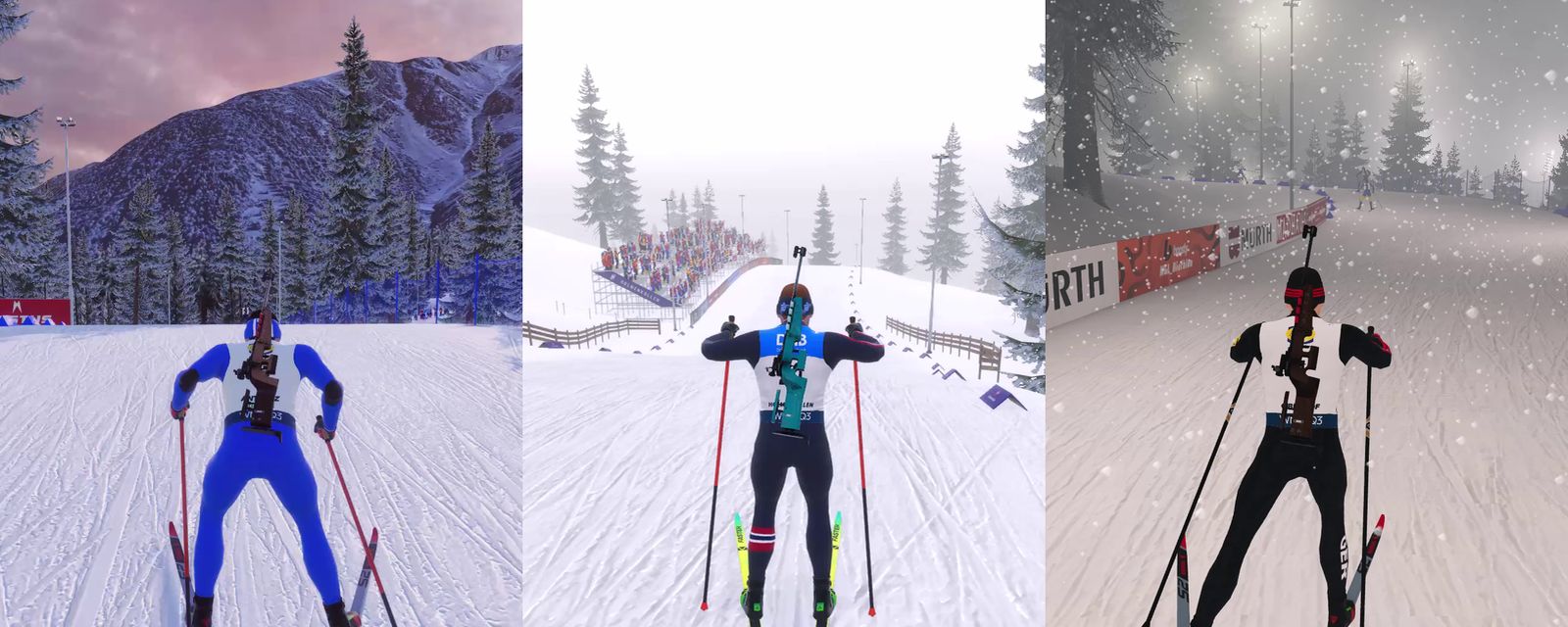
NGL Biathlon 2027 has fifteen tracks. Time of day and weather are not tied to a track: a race on any of them can run in the afternoon, the evening or at night, in snowfall or in fog. Weather affects speed through the skis, so it decides which pair you start on. Below: where races are held, how the game picks the weather and how to choose your skis
Tracks
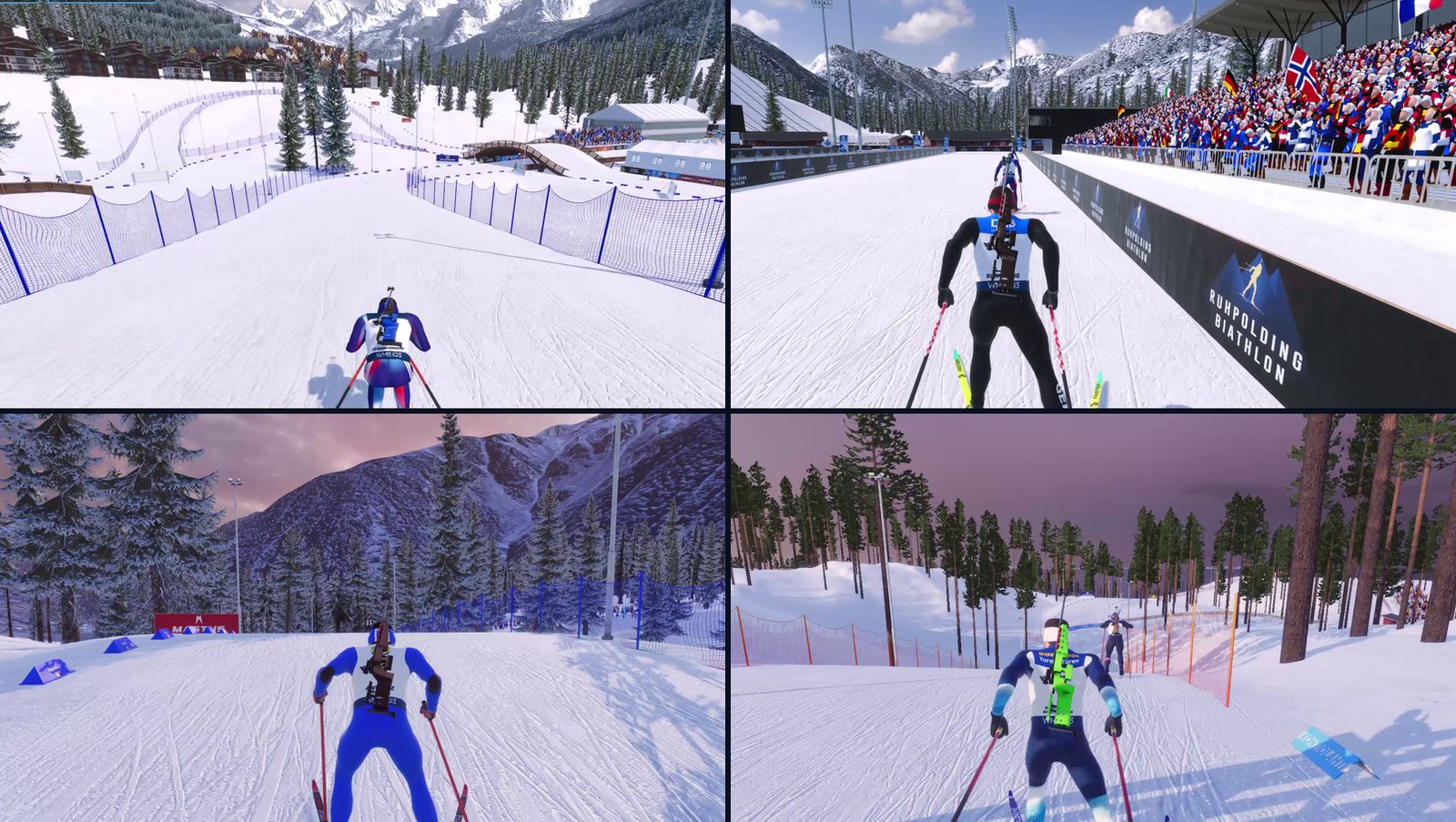
- Germany: Oberhof and Ruhpolding
- Austria: Hochfilzen
- Italy: Antholz
- France: Annecy
- Switzerland: Lenzerheide
- Norway: Holmenkollen
- Sweden: Ostersund
- Finland: Kontiolahti
- Czech Republic: Nove Mesto
- Slovenia: Pokljuka
- Estonia: Otepaa
- USA: Soldier Hollow
- Canada: Canmore
- Russia: Sochi
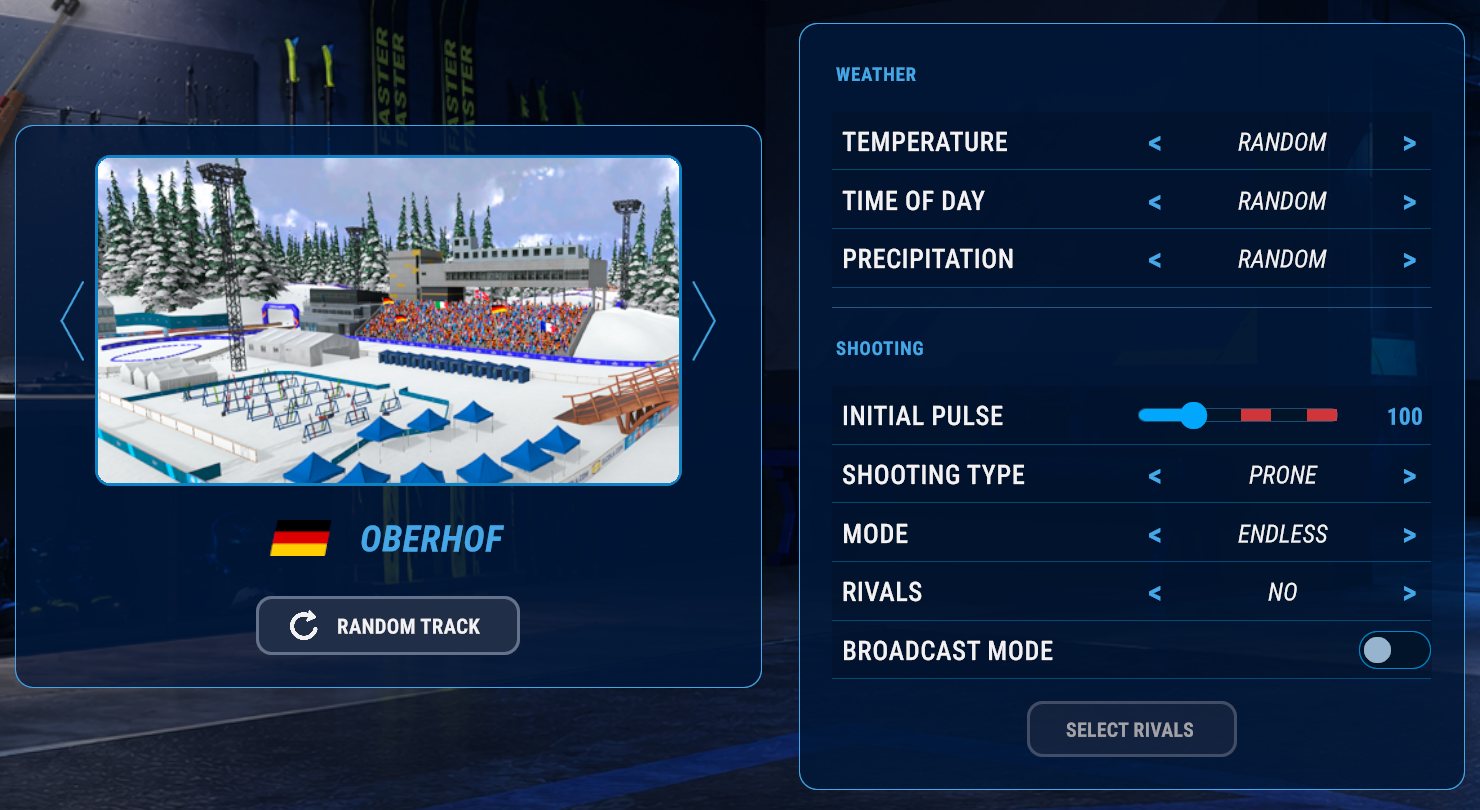
All fifteen are available in a quick race. You pick the track with the arrows on the track selection screen, or let the random button decide
Tracks in the career
The career calendar is rebuilt every season. The game gives one track to the championship and shuffles the rest across the stages, so no track repeats within a season. Each league gets its own order of tracks, while the championship is held at the same venue for all leagues. That is why a season can have at most one stage fewer than there are tracks. You choose the number of stages when you create the career
Sochi is not part of the career by default. The "Sochi in career" line turns it on, either when you create the career or later on the "Career" tab of the settings. Each career has its own setting. If you switch it on mid-season, it takes effect from the next season, because the current calendar is already built
Race weather
The weather has three parts:
- Time of day: afternoon, evening or night
- Temperature: one of six ranges, from "+10..+6" down to "-16..-20"
- Precipitation: snow, heavy snow, fog, dense fog or no precipitation
In a quick race you set all of this on the track selection screen, and every line has a "Random" option. In the career and in your own tournament the game picks the weather for each race. When the game picks, the weather stays believable:
- Snow only falls in the "0..-5" range and colder. There is no snow in warm weather
- Fog only occurs on seven tracks. Most often in Oberhof, less often in Holmenkollen and Antholz, now and then in Ruhpolding, Pokljuka and Sochi, most rarely in Lenzerheide
- The game never picks heavy snow or dense fog on its own. You can order them in a quick race, like any other combination, for example fog in Ostersund or snow above zero
- Every race of a stage stays in the temperature range of the stage's first race or a neighbouring one. A thaw is never followed by hard frost the next day
Temperature changes during the race
The "Race preparation" screen shows the temperature forecast. It always shows the start and the end, for example "-10° → -6°". If the weather holds, the two numbers match: "-10° → -10°". The forecast does not lie: the temperature in the race never leaves it. In the afternoon it usually gets warmer, in the evening and at night it usually gets colder
The temperature changes over almost the whole stage, from the first starter to the last finishers. In races with an interval start, late bibs race in weather that has moved further from the start. In the sprint and the individual races the same screen sometimes has a "Start group" line. At regular stages it appears when your athlete is in the top third of the overall standings, from the second individual race of the season on. Picking a group means picking the weather too: if it gets warmer towards the end of the stage, a late group will race in the warmth
Skis and temperature
On the course weather works through how well the skis glide, the athlete's energy does not depend on it, and how skiing itself works is covered in Skiing: stats, boost and superboost. Temperature is what counts. Snow and fog change how the track looks but barely affect the glide. Fog also gets in the way at the range: the targets blur in the sight, and strong rivals miss more often in fog
Every pair of skis has a temperature at which it glides best. The further the weather is from it, the smaller the speed bonus, but it never drops to zero: every pair gives some bonus in any weather. Higher-class pairs win both ways. The difference between pairs shows most on downhills: there is no pushing there, so the slope and the skis decide the speed
Your opponents follow the same rules. The game picks each AI athlete a pair for the forecast from their brand's range, and the skis work for them with the same formula as for you. Sometimes the brand has no suitable pair, and then the AI athlete races on the one closest to the weather
How to choose a pair
On the "Race preparation" screen the chosen pair is on the right: its efficiency in this race and the "Efficiency forecast" chart for the duration of the race. A pair is chosen in two steps: the "Ski Brand" row, then "Ski Model". The best pair of the chosen brand for the forecast is marked "Recommended", and the "Auto-pick" button puts it on straight away
In the career you choose from the pairs you have bought: only their brands are on the list, and before every race the screen puts on the best pair for the forecast from the brand the athlete raced on last time. Skis are sold in the career shop on the "Skis" tab. The "i" button on a pair shows how its efficiency changes with temperature. Having several pairs means you have something to put on for both cold and warm days. In your own tournament every pair is available. In a quick race you choose the ski brand and model together with the athlete
The game settings have a "Ski characteristics" line. With it turned off, glide is the same for every pair and every athlete and no longer depends on the weather. In the career ski characteristics are always on